

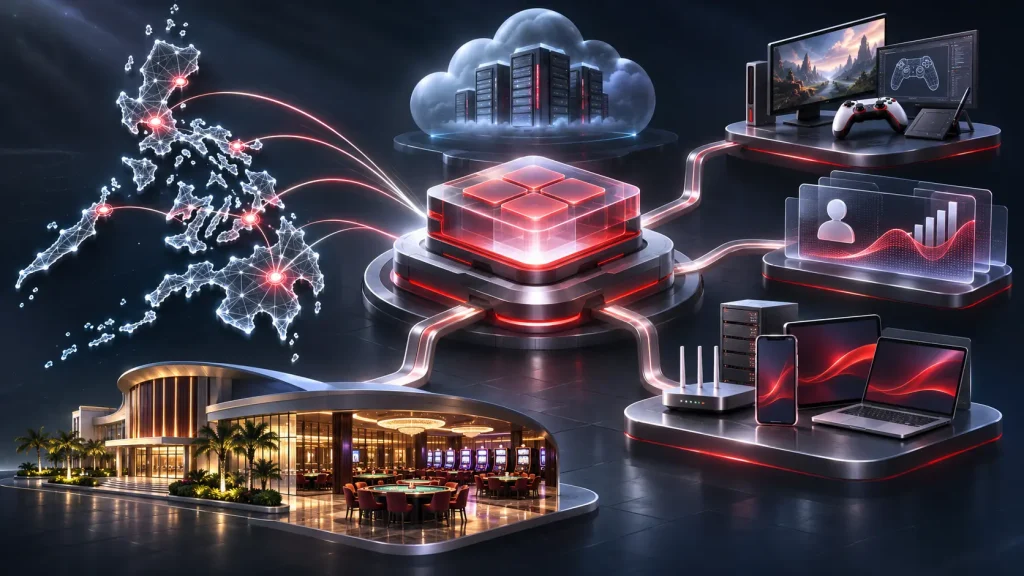
DigiPlus Interactive is setting out to become a gaming-as-a-service ecosystem within three years, a strategy that would move the Philippine operator beyond running consumer brands and deeper into proprietary content, technology and online-to-offline distribution.
The target was reported by The Philippine Star on 18 November. DigiPlus said the plan centres on developing more in-house games, localising content, personalising engagement and widening its acquisition funnel beyond conventional gaming products.
The distinction matters. BingoPlus, ArenaPlus and GameZone have made DigiPlus one of the Philippines’ largest digital gaming operators. A gaming-as-a-service model implies a broader stack: owning more of the content economics, using shared technology and player data across brands, and connecting digital customers with physical entertainment assets.
Proprietary games become an economic lever
DigiPlus intends to accelerate proprietary game development because self-produced titles allow it to retain more of the economics that would otherwise flow to third-party suppliers. The company has already started building that capability. Its 2 November earnings release said it introduced nine self-developed games, including the live products Bingo Speed and Live Mines, plus RNG titles Beto Beto and Pinoy Drop Ball International.
It has also used local intellectual property as a content engine. Five games based on Regal Entertainment’s Shake, Rattle & Roll franchise launched first on BingoPlus, with distribution to ArenaPlus and GameZone planned. That rollout gives DigiPlus a practical test of whether Philippine cultural familiarity can improve acquisition and retention across several products.
The strategy is being framed against softer financial conditions. Nine-month revenue fell 32% year on year to PHP45.75 billion, while net income declined 12% to PHP8.85 billion. However, average monthly active users increased 3% quarter on quarter to 5.9 million and monthly active bettors and depositors rose 5% to 4.9 million. DigiPlus ended September with PHP11.7 billion in cash and cash equivalents.
IEC supplies the land-based bridge
DigiPlus also plans to use its investment in International Entertainment Corporation to create a more seamless online-to-offline entertainment system. It invested PHP12.2 billion in IEC convertible notes during the first half of 2026, giving it rights that can lead to a controlling economic interest.
IEC owns the New Coast Hotel and LaVie casino interests in Manila. The group has separately prepared a self-operated online platform for LaVie, creating a potential physical and digital distribution bridge. DigiPlus has not disclosed a timetable for integrating its brands, technology or player databases with IEC, so that part of the strategy remains a direction rather than a completed operating model.
Our view: DigiPlus is responding to a mature domestic growth equation by trying to own more layers of the value chain. Proprietary games can improve margins, but “gaming as a service” will only become a genuine business-model change if the company proves that its technology and content can serve multiple brands, channels or external customers without weakening regulatory controls. We expect the next useful disclosure to be less about the label and more about measurable output: the share of wagering from in-house games, development costs, cross-brand retention and any third-party platform revenue.
This is a material strategic update to IGI’s earlier coverage of DigiPlus’s third-quarter results. Follow the Companies deskand Philippines market page for further operator, platform and product developments.